
Clearing Out a Basement After Water Damage in Metro Detroit
· 8 min read
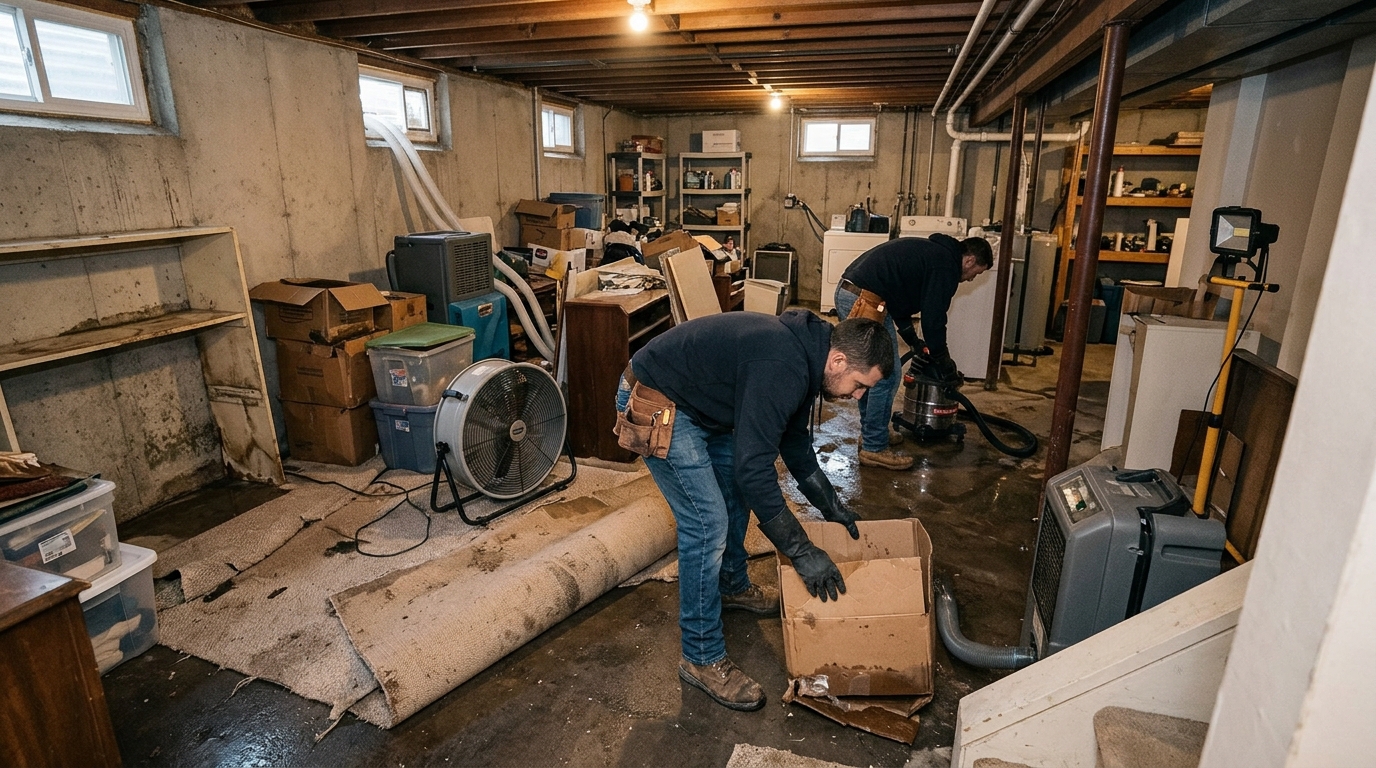
Every spring, the same scene plays out in basements across Royal Oak, Ferndale, Clawson, and Madison Heights. An overnight storm overwhelms the storm sewers, a sump pump burns out mid-downpour, or a February deep freeze cracks a supply line while the family is away. By morning, the carpet is squishing underfoot and decades of stored boxes are sitting in an inch of cold, murky water. Clearing out a basement after water damage is one of the most overwhelming cleanup jobs a homeowner faces, and the order you work in matters — for your safety, for your insurance claim, and for whatever you can still save. Here is the same playbook we share with neighbors across Oakland County who call us after a flood.
First 24 Hours: Make the Basement Safe Before You Start
Electricity and gas come first
Water and electricity are a dangerous combination. If you can reach your breaker panel safely — on dry ground, in rubber-soled boots — shut off power to the basement circuits before anything else. If the panel itself is wet or standing water is close to it, stop and wait for an electrician. The same logic applies to gas appliances: most Michigan basements hold the furnace and water heater at floor level. If floodwater reached either unit, or you smell gas at any point, leave the house and call your utility's emergency line.
Gear up, then document everything
Basement floodwater frequently carries sewage, road runoff, and bacteria, even when it looks clean. Put on rubber boots that rise above the ankle, waterproof gloves, and at minimum an N95 respirator. Before you move a single box, walk the space with your phone and capture photos and video of every wall, every damaged item, and the water line on the foundation. Your insurance adjuster will want that documentation, and it's far easier to record before the teardown chaos begins.
Figure out what kind of water you're dealing with
A burst supply line releases relatively clean water. Water that entered through a floor drain, a backed-up sewer line, or an overwhelmed storm system during a metro Detroit cloudburst is another category entirely — anything porous it touched needs to go, and hard surfaces need disinfecting. If sewage was involved and the damage is widespread, a professional restoration company should handle deep sanitizing before you spend long hours down there.
What to Save and What to Toss When Clearing Out a Basement After Water Damage
Time is the enemy during basement cleanup. Restoration and health professionals generally give wet porous materials 24 to 48 hours before mold begins to take hold, so make fast, decisive calls rather than agonizing over each item. Use this table as a starting point:
| Item | Verdict | Why |
|---|---|---|
| Solid wood furniture | Often salvageable | Solid wood tolerates water; dry it slowly, away from direct heat |
| Metal shelving, plastic totes, glass, ceramics, cast iron | Salvageable | Non-porous surfaces wash and disinfect well |
| Framed photos and important documents | Maybe | Air-dry carefully, or freeze them so a document restorer can work on them later |
| Mattresses, box springs, upholstered furniture | Toss | Cushioning soaks up water and holds contamination deep inside |
| Particle board and pressboard furniture | Toss | Swells and delaminates; it never regains structural strength |
| Carpet padding | Always toss | Acts like a sponge and is inexpensive to replace |
| Carpet itself | Usually toss | Worth saving only after a clean-water flood that dried quickly; gone after any sewer backup |
| Cardboard boxes and their contents | Mostly toss | Cardboard wicks water upward; rescue dry contents into clean plastic totes |
As you work, sort into three zones: a keep pile on the dry side of the basement, a disposal pile headed straight for the stairs, and a small maybe pile. Photograph every item in the maybe pile before setting it aside so your insurance claim still has a record if you end up letting it go.
Tearing Out What Can't Be Saved
Carpet and padding
Pull the padding out first — it comes up in soggy strips and never survives a flood. Then cut the carpet into strips roughly three to four feet wide with a utility knife, roll them tight, and tape each roll so it stays bundled on the way upstairs. If the flood came from clean water and the carpet dried within a day or two, professional cleaning can sometimes save it. After a sewer backup, it belongs in the disposal pile.
Drywall and insulation
Standard restoration practice is to cut drywall 12 to 24 inches above the visible water line, because moisture wicks upward inside the wall cavity. Wet fiberglass insulation loses most of its insulating value, and wet blown-in insulation clumps and sags, so both should come out. Bag debris as you cut to keep the cleanup contained.
Appliances, water heaters, and electronics
A water heater that sat in floodwater usually needs to be replaced, not dried out. Washers and dryers with electronic control panels often never run right after a soak. Old televisions, stereos, and workshop dehumidifiers should be assumed finished — and planned for proper recycling rather than a trip to the curb.
Dumpster Rental or Full-Service Junk Removal for a Flooded Basement?
Once the sort is done, everything headed for disposal has to travel up the basement stairs — and wet carpet, sodden drywall, and waterlogged furniture are heavier than they look. You have two realistic paths:
Rent a dumpster and load at your own pace
If you're handling the demo yourself over a weekend, renting a dumpster in Royal Oak keeps the project moving. The bin sits in your driveway (we lay boards down to protect the pavement), you fill it as rooms get cleared, and you're not piecing debris out through weeks of curbside pickup. Just keep paint, chemicals, tires, and batteries out of the bin — more on that below.
Hire a crew and stay out of the basement
After a flood, the last thing most homeowners want is a second weekend of hauling soaked carpet up a narrow stairwell. With full-service junk removal, our crew carries everything up and out, loads the truck, and sweeps up behind us — often in a single visit. Usable furniture and household goods get set aside for donation, and scrap metal and electronics are directed to recycling rather than the landfill.
| Approach | Best For | Trade-Off |
|---|---|---|
| Full-service junk removal | One-visit convenience, heavy wet loads, no lifting | You schedule around our crew |
| Dumpster rental | Multi-day demo, flexible pace, whole-basement gut jobs | You do the stair climbing |
Metro Detroit Disposal Rules to Know Before You Haul
Half a basement's worth of debris will overwhelm weekly curbside collection, and several common flood-cleanup items have special handling rules:
- Electronics: Old TVs, monitors, and dehumidifiers count as e-waste in most metro Detroit communities and should go to recycling, not the curb.
- Paint, stains, fuels, and chemicals: These are household hazardous waste. Oakland County communities periodically run hazardous waste collections — set these items aside in a separate pile.
- Refrigerant appliances: Mini fridges, window AC units, and dehumidifiers contain refrigerant that must be recovered properly before disposal.
- Tires and batteries: Neither belongs in a dumpster or regular trash; both have dedicated recycling channels.
For a detailed, local rundown of what goes where, we maintain a recycling and bulk disposal guide for Royal Oak and nearby communities.
Keeping the Next Flood Out of Your Basement
Once the rebuild is underway, a little prevention goes a long way in Michigan's climate:
- Test your sump pump each season by pouring a bucket of water into the pit and confirming the pump kicks on.
- Add a battery backup pump — power outages and heavy storms tend to arrive together, which is exactly when you need the pump most.
- Extend downspouts several feet away from the foundation, and clear your gutters; the mature maples and oaks lining older Royal Oak and Ferndale streets clog them fast each fall.
- Grade soil so it slopes away from the foundation rather than toward it.
- If your street's sewers back up during downpours, ask a plumber whether a backflow valve makes sense for your home.
- During Michigan cold snaps, keep the house heated and make sure everyone knows where the main water shutoff is — burst pipes are a leading cause of basement floods here in the winter.
Clearing Out a Basement After Water Damage Around Metro Detroit
A & B Junk Removal is a local, Royal Oak-based crew — not a national call center. Spring thaw and summer cloudbursts keep us busy in basements from Ferndale and Clawson out through Troy, Birmingham, Warren, Sterling Heights, Novi, West Bloomfield, and down toward Howell. We've hauled waterlogged carpet out of century-home basements near Woodward Avenue and helped families in newer subdivisions clear out after sump pump failures, so we know how these cleanouts actually go. We can place a dumpster in your driveway with protective boards, or send a full-service crew up and down those basement stairs for you — and we sort usable items for donation and recycling wherever we can.
Basement Flood Cleanup FAQs
How quickly should I start clearing out a basement after water damage?
As soon as the space is electrically safe to enter. Mold can begin growing on wet porous materials within 24 to 48 hours, so the sooner carpet padding, drywall, and cardboard come out, the smaller your overall remediation problem. Even before hauling anything, open windows and run fans or a dehumidifier to start the drying clock.
Can wet carpet and furniture go in a rental dumpster?
Yes — waterlogged household items are fine in a dumpster, and soggy loads are common after floods. The short list to keep out includes paint, stains, fuels, chemicals, tires, and batteries, which need separate disposal channels.
Do I have to dry everything before your crew arrives?
No. We haul wet loads all the time. Do pump out any remaining standing water first — junk removal and dumpster crews remove items, not water — and pull out anything valuable or sentimental before we get there.
Which is better for a flooded basement: a dumpster or a removal crew?
A rough rule of thumb: a single demo day in one room leans toward full-service removal, while a whole-basement gut over several days leans toward a dumpster. Plenty of homeowners use both — a dumpster for the demo debris, then one final pickup for the odds and ends.
Which areas do you serve?
We're based in Royal Oak and serve much of metro Detroit, including Troy, Birmingham, Bloomfield Hills, Beverly Hills, Ferndale, Madison Heights, Clawson, Hazel Park, Oak Park, Southfield, Warren, Sterling Heights, Novi, Farmington Hills, West Bloomfield, Waterford, Pontiac, Auburn Hills, and out to Howell.
Get Your Basement Back Faster
Clearing out a basement after water damage is heavy, dirty work, but you don't have to haul it up the stairs alone. A & B Junk Removal offers full-service pickups and driveway-friendly dumpsters across Royal Oak, Ferndale, Clawson, Madison Heights, Troy, Birmingham, Warren, Sterling Heights, and communities throughout Oakland County and beyond. Book your junk removal pickup online or call (248) 900-1722, and we'll take the soggy stuff off your hands so you can get on with the dry-out, the rebuild, and getting that basement back to normal.